 mposed
primarily of retirees.
mposed
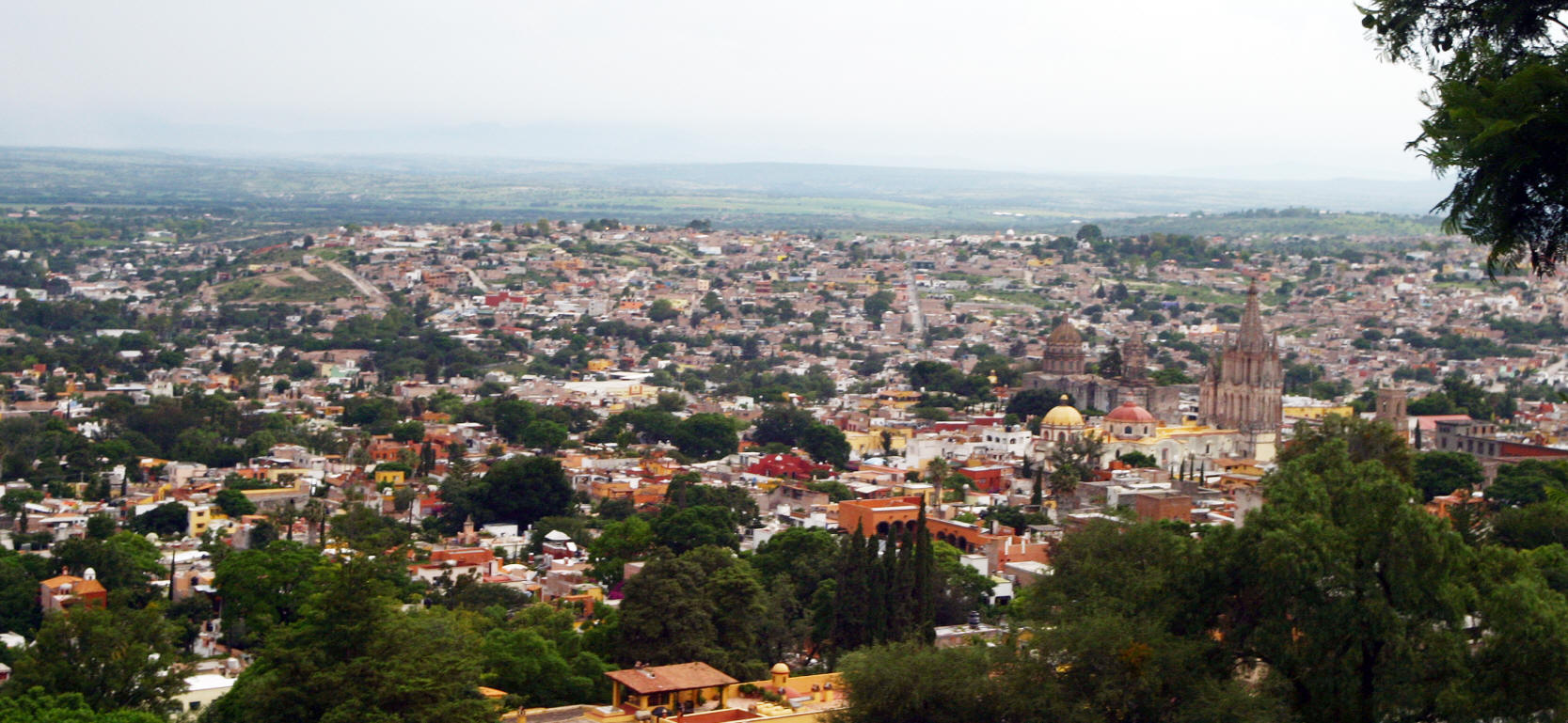
primarily of retirees.San Miguel de Allende is located in the eastern part of Guanajuato in Mexico's mountainous bajío region. The bajío (low place) is a relatively flat region about 2,000 m (7,000 ft) above sea level surrounded by mountains; it is a part of the Mexican altiplano. San Miguel serves as the administrative seat for the surrounding municipality of Allende, Guanajuato.
San Miguel de Allende is located at 20°92′N 100°74′W / 21.533°N 101.233°W / 21.533; -101.233. The municipality rests at 1,870 m (6,140 ft) above sea level. The municipality extends over an area of 1,537.19 km2 (593.51 sq mi). To the north it is bordered by the municipalities of San Luis de la Paz and Dolores Hidalgo. To the west it is also bordered by Dolores Hidalgo. To the south the municipality is bordered by Juventino Rosas, and Comonfort and to the southeast by Apaseo el Grande. To the northeast it is bordered by San José Iturbide. Finally, to the east it is bordered by Querétaro municipality in the state of Querétaro. The municipal seat is located 274 km (170 mi) from Mexico City and 97 km (60 mi) from the state capital at Guanajuato, Gto.
According to the 2005 census, the municipality of Allende had a total of 139,297 inhabitants. Of these, 62,034 lived in the municipal seat of San Miguel de Allende (the ninth-largest community in the state), with the remainder living in smaller surrounding communities within the municipality, the largest of which are Los Rodríguez and Colonia San Luis Rey. The largest sector of employment among the 39,371 economically active inhabitants was manufacturing (18.1%), followed by construction (16.3%) and retail and wholesale commerce (13.6%).
As of 2006, the elected San Miguel city government officials were using these updated figures compiled from both the Mexican census bureau and from US consulate figures:
History
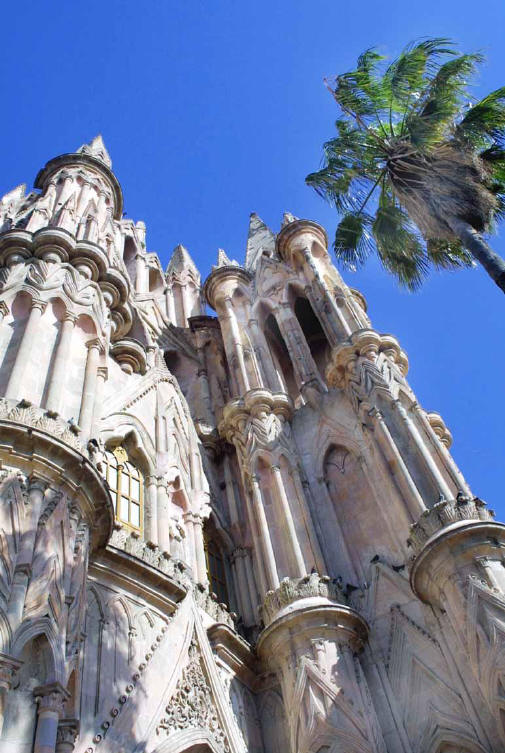
La Parroquia, Church of St. Michael the Archangel
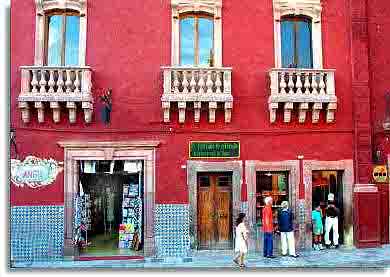
The Temple of the NunsThe town was founded in 1542 by the Franciscan monk Fray Juan de San Miguel. It was an important stopover on the Antiguo Camino Real, part of the silver route from Zacatecas, Zacatecas. The town featured prominently in the Mexican War of Independence. General Ignacio Allende, one of San Miguel's native sons, was a leading player in the war against Spain for independence. Allende, captured in battle and beheaded, is a national hero. San Miguel el Grande renamed itself "San Miguel de Allende" in 1826 in honor of his actions.
By 1900, San Miguel de Allende was in danger of be
 coming
a ghost town. Declared a national historic monument in 1926 by the Mexican
government, development in the historic district is restricted in order to
preserve the town's colonial character. During the Cristero uprising in Mexico,
when clergy and their families were persecuted, the grandchildren of Gen.
Mariano Escobedo came to San Miguel de Allende, which was conveniently in a
secluded condition while verging on being a ghost town.
coming
a ghost town. Declared a national historic monument in 1926 by the Mexican
government, development in the historic district is restricted in order to
preserve the town's colonial character. During the Cristero uprising in Mexico,
when clergy and their families were persecuted, the grandchildren of Gen.
Mariano Escobedo came to San Miguel de Allende, which was conveniently in a
secluded condition while verging on being a ghost town.The six children of the daughter of Mariano Escobedo, Donna Maria del Refugio, were Don Anastasio Lopez Escobedo, Don Ezequiel Lopez Escobedo, Dr Ignacio Lopez Escobedo, and the sisters, Balbina and Isabella Lopez Escobedo. The elder child was a Cura, a charismatic head priest, Don Jose Lopez Escobedo, for whom the family was persecuted. The Cura Jose Lopez is interred at the main altar under St. Peter in the main Parroquia church of San Miguel, with a beautiful dedication to his work restoring the church in the 20th century. Lopez Escobedo is interred in the Church by the world-famous and miraculous Christ of the Conquest. The family fled their native home hacienda, Hacienda de los Lopez, to San Miguel Allende, where the Escobedo had a home, on Calle de Mesones and where a plaque still identifies the house.
Few descendants from this family live in San Miguel, as only Don Ezequiel Lopez Escobedo had children. The eldest of his grandchildren is Marcela Andre Lopez, an international teacher and designer of jewel garlands now in residence in the historic district i
 n
one of Don Ezequiel Lopez Escobedo's homes. Sr. Ezequiel Lopez Basurto, son of
Don Ezequiel Lopez Escobedo, has presided over many works by the Rotary Club.
n
one of Don Ezequiel Lopez Escobedo's homes. Sr. Ezequiel Lopez Basurto, son of
Don Ezequiel Lopez Escobedo, has presided over many works by the Rotary Club.In the early 20th century, the family fortune of the Lopez Escobedo brothers and sisters was largely donated to schools for girls, convents for nuns, or lost to older distant relatives and people helped by the family who falsified papers or discovered hidden treasure after Don Ezequiel's sudden stroke and death. The impoverished barkeeper's assistant who found Don Ezequiel's property deeds and gold kept the find from Don Ezequiel's widow and five children who suffered hardships as orphans. The barkeeper's assistant had leased the store at Calle Relox and San Francisco Street from Don Ezequiel's widow and in the abundant inventory found more than could have been imagined.