
Home ○
Regions ○
Planning & Info ○
RVing ○
Road Logs ○ Insurance ○ Photos ○
Mexico News ○
Ontheroadin

|
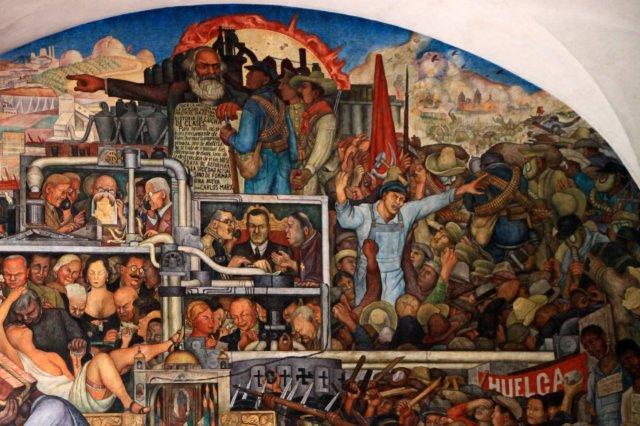
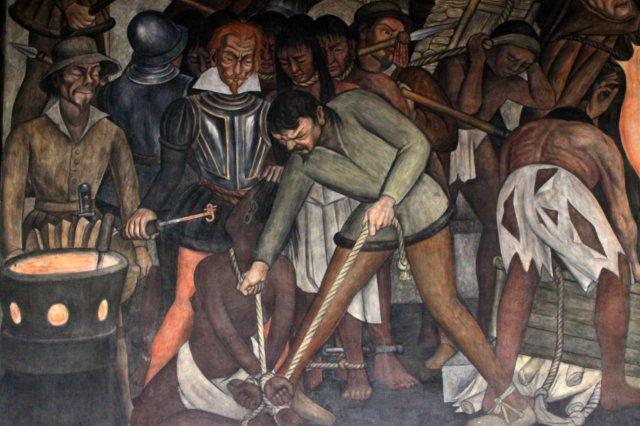
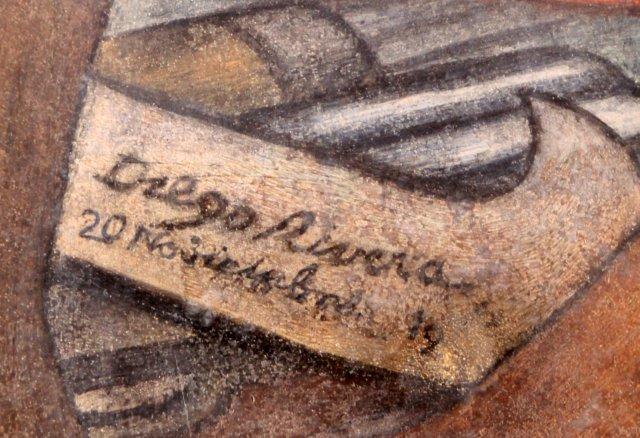
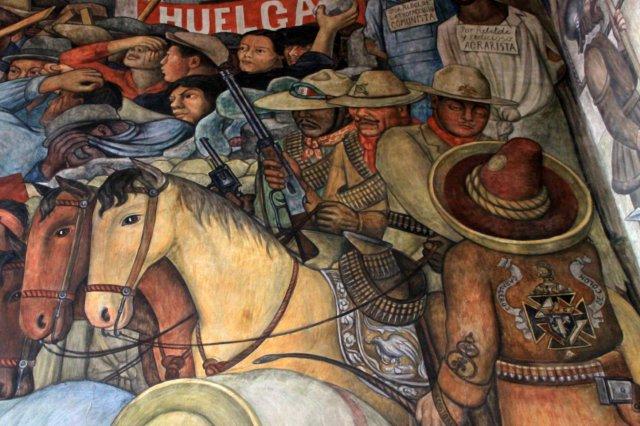
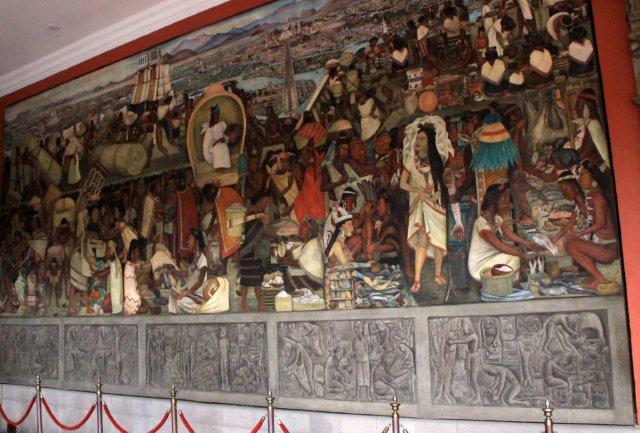
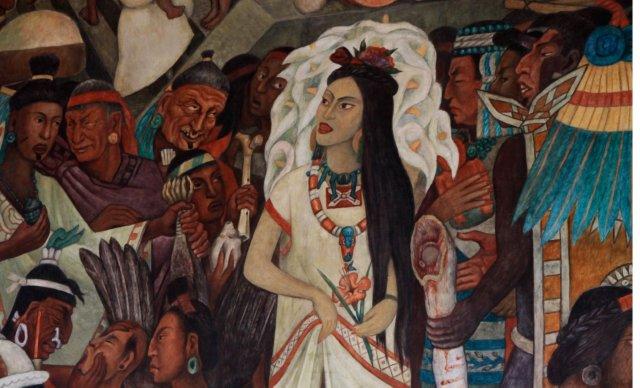
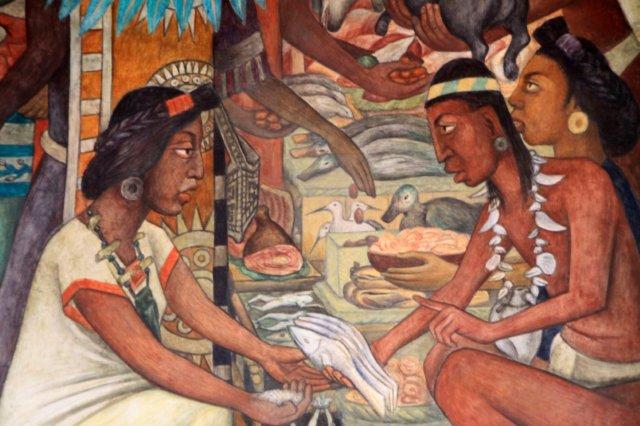
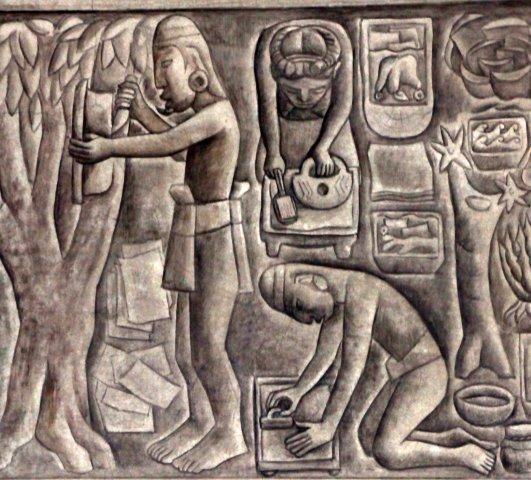
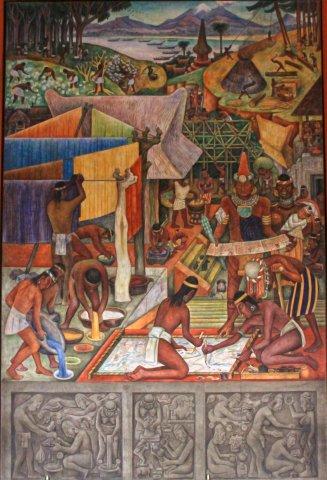
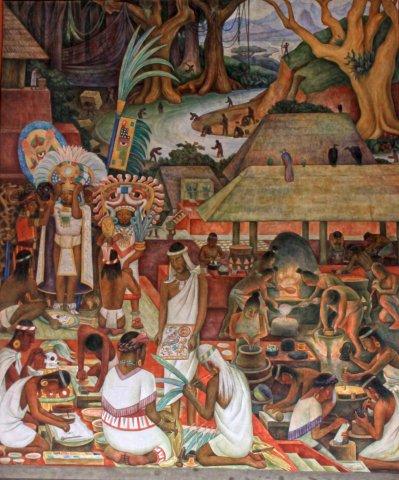
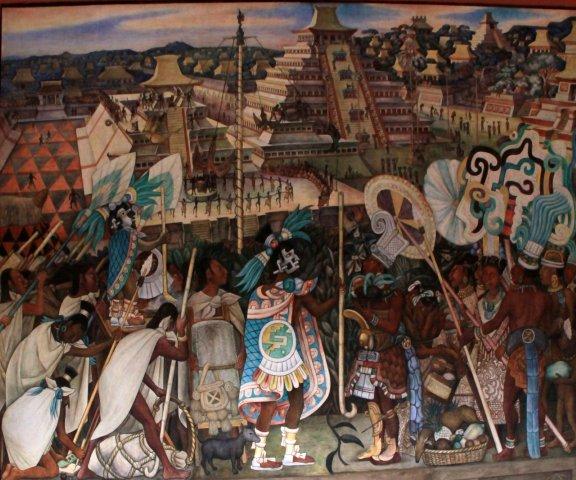
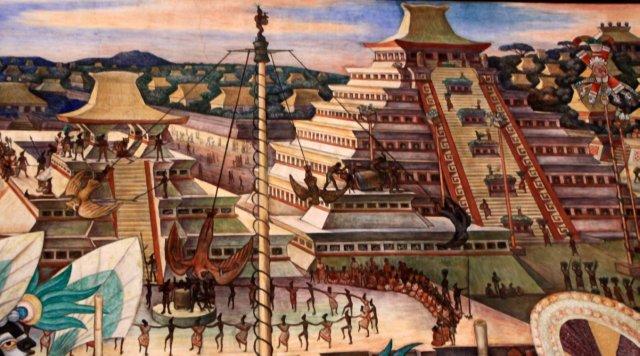
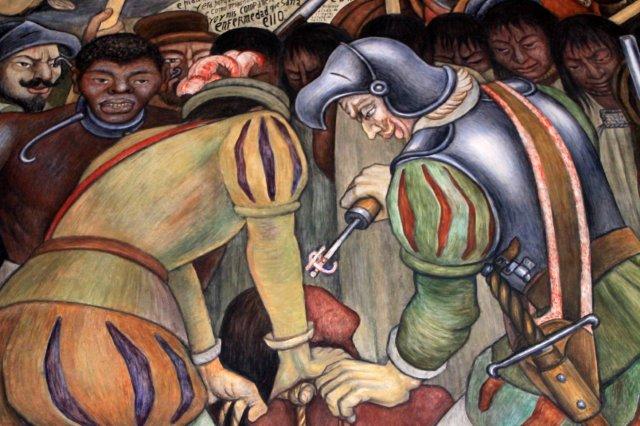
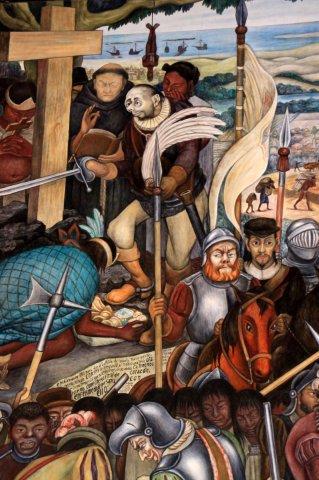
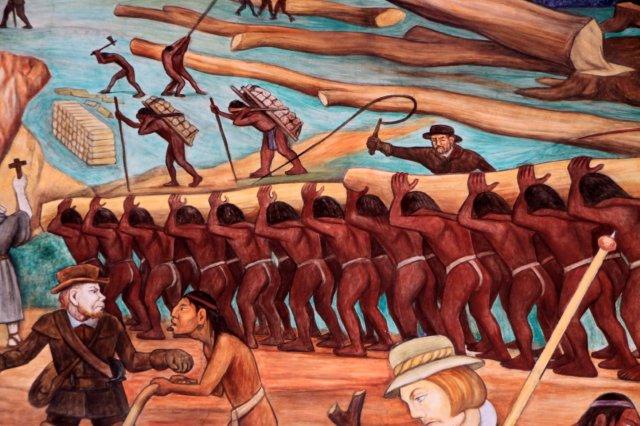
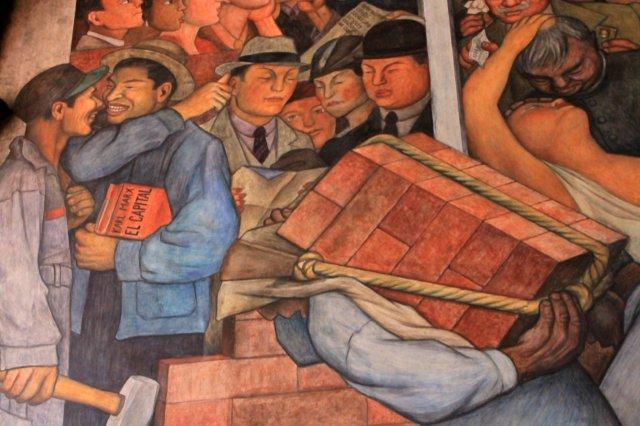
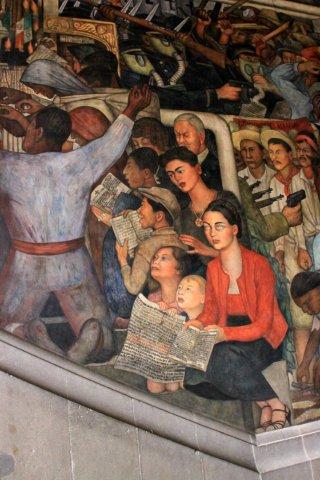
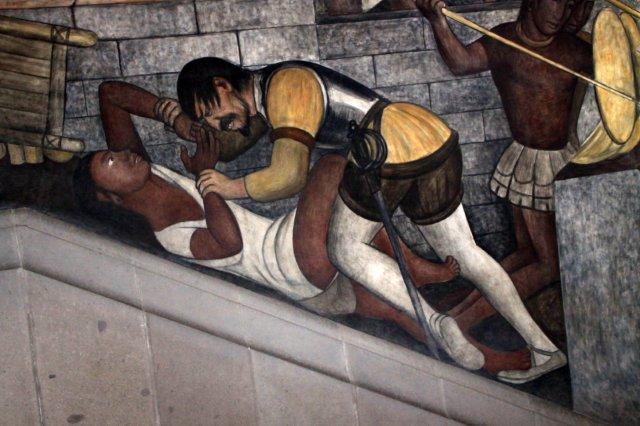
Diego Rivera, Presidential Palace Mexico City Photography by Bill and Dorothy Bell
The central door leads to the main patio
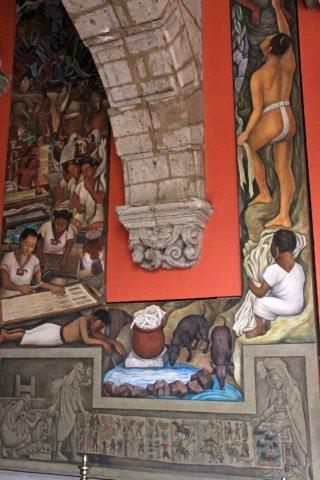
which is surrounded by Baroque arches. Only the balustrade of
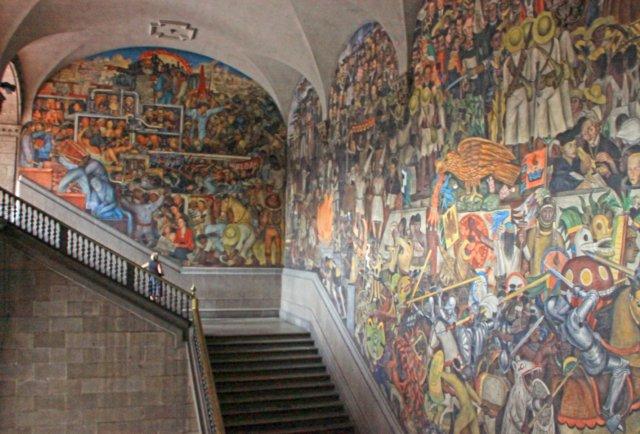
this area has been remodeled, conserving the murals by Diego
Rivera that adorn the main stairwell and the walls of the second
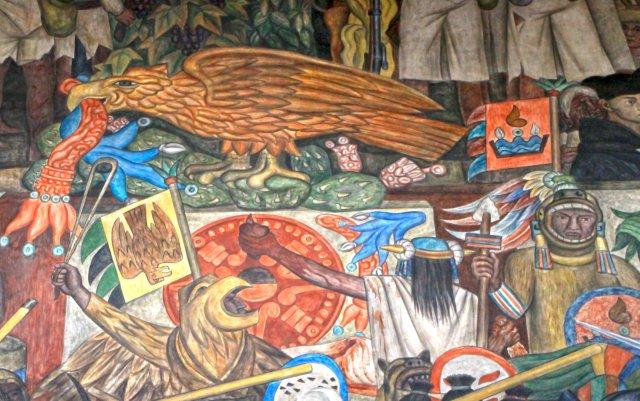
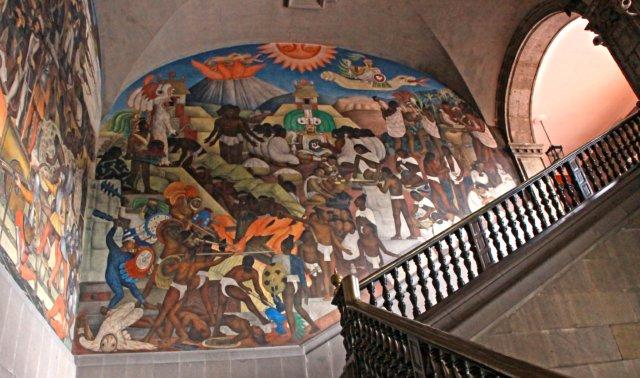
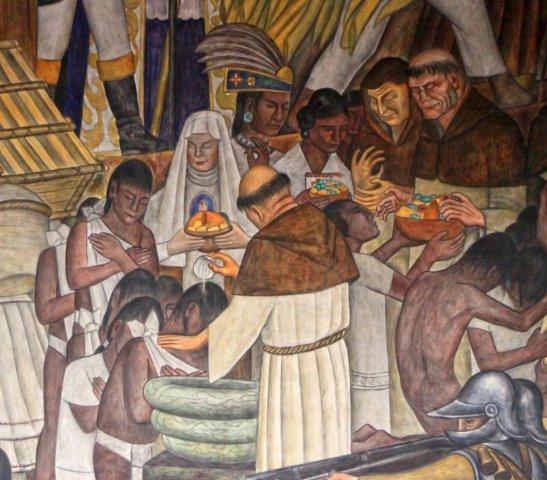
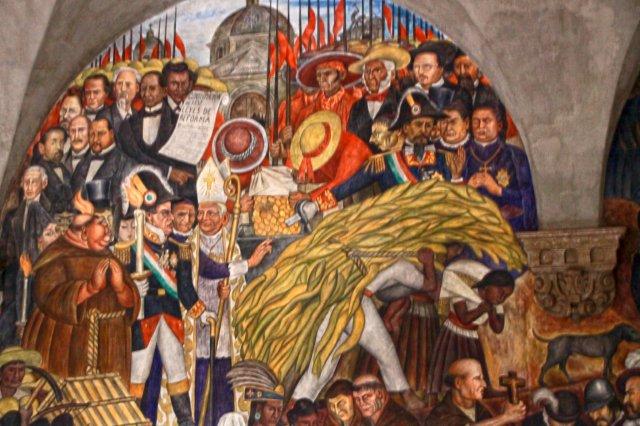
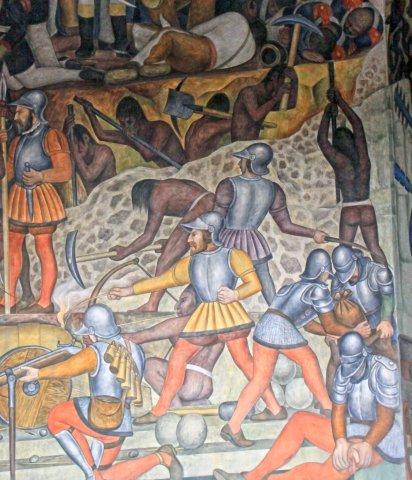
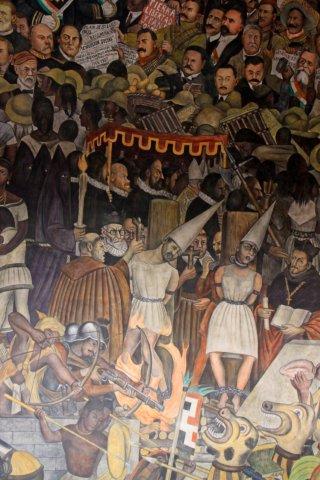
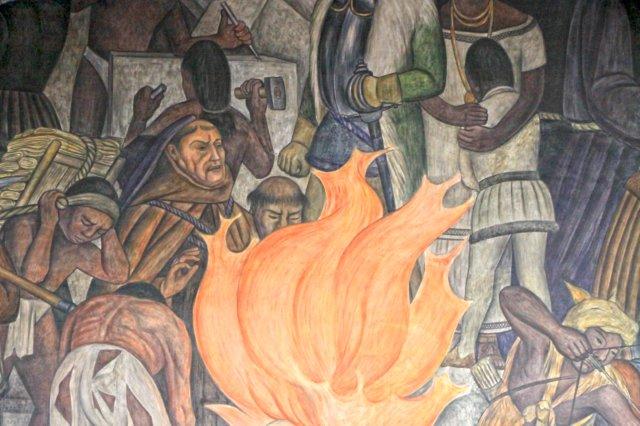
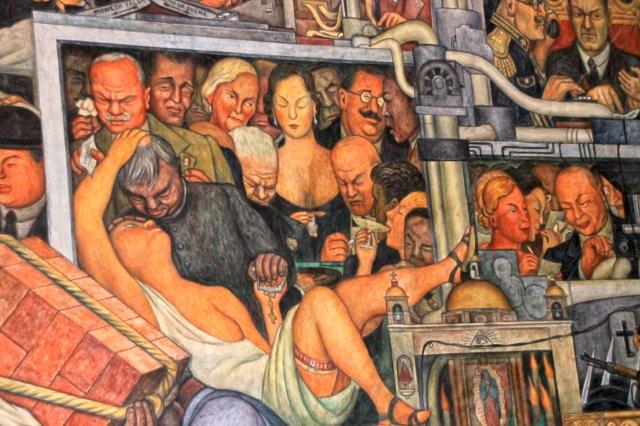
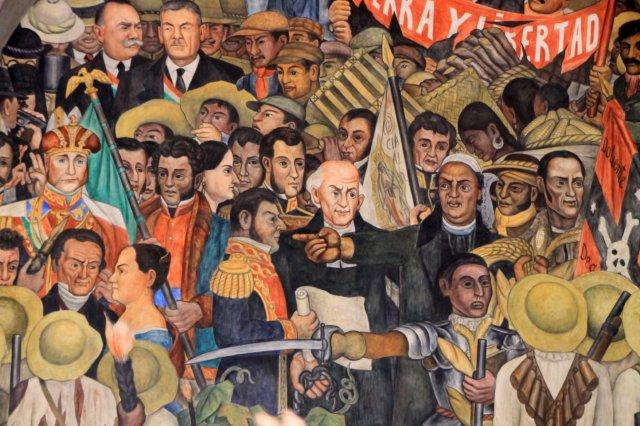
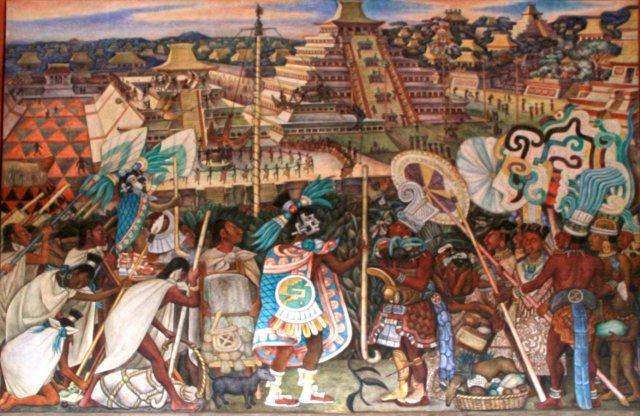
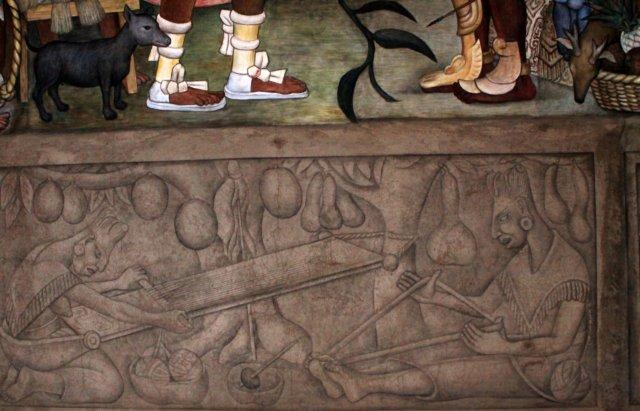
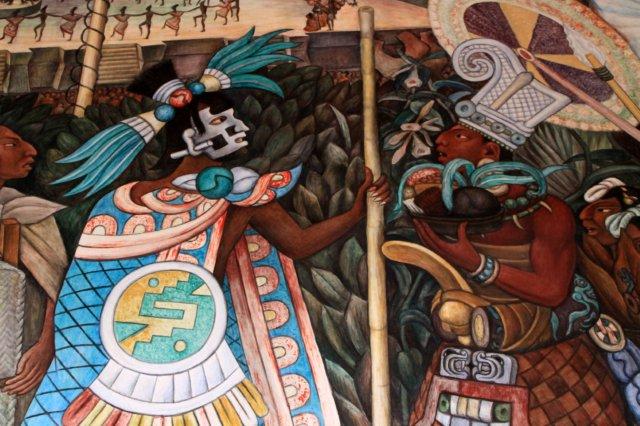
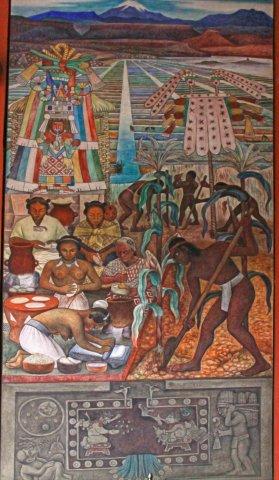
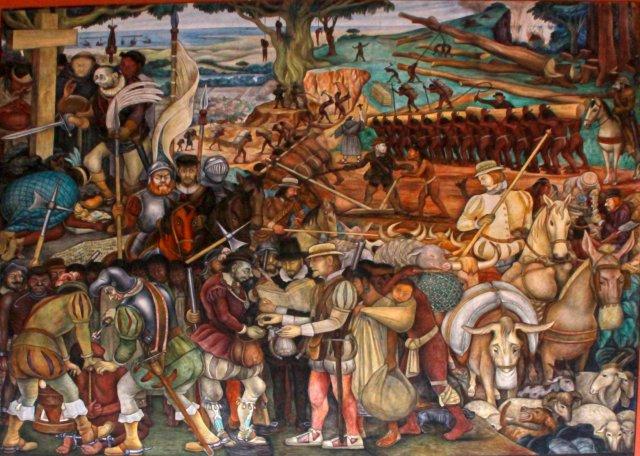
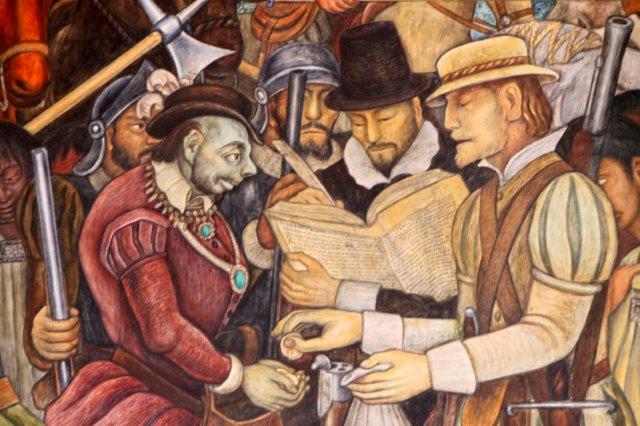
floor. In the stairwell is a mural depicting the history of
Mexico from 1521 to 1930, and covers an area of 450 m2 (4800
ft2). These murals were painted between 1929 and 1935, jointly
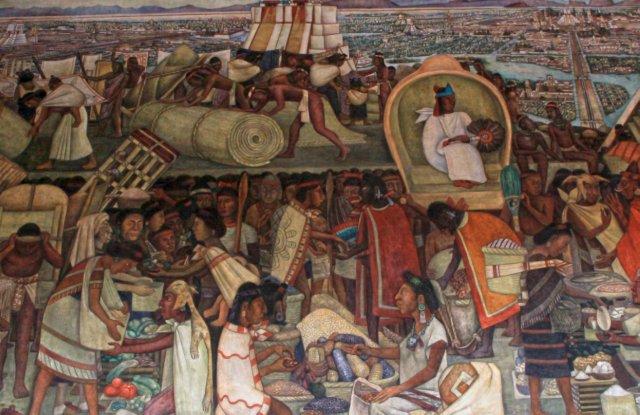
titled "The Epic of the Mexican People". The work is divided
like a triptych with each being somewhat autonomous. The
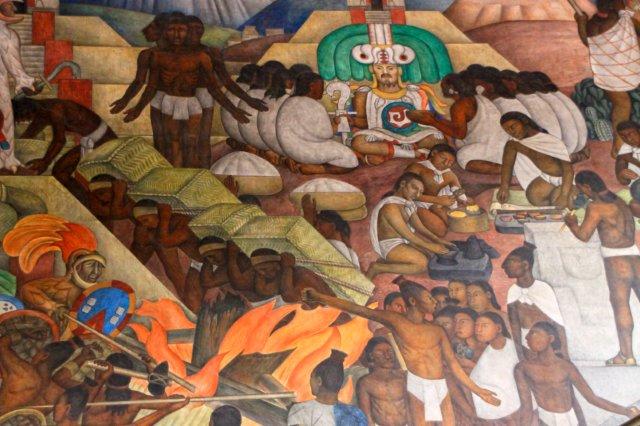
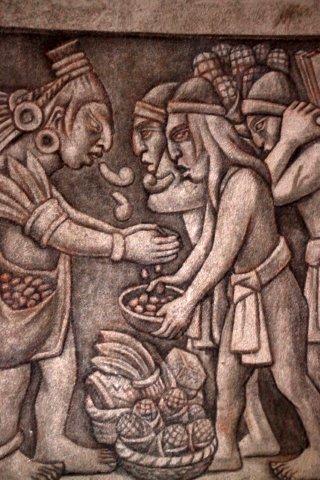
right-hand wall contains murals depicting pre-Hispanic Mexico
and centers around the life of the Aztec god Quetzalcoatl.
Quetzalcóatl appears in the mural as a star, a god, and a human
being. Created by serpents, he sails through space as a star
that accompanies the sun at night. Quetzalcóatl then assumes a
human body to teach the Aztec people as their king and
patriarch. Last, when he sacrifices his blood to give life to
men, he returns to the sky having completed his earthly cycle.
Once he leaves the earth, Quetzalcóatl assumes the shape the
morning star, called Tlahuizcalpantecuhtli. The cycle that he
undergoes signifies the continuous cycle of life. Rivera's
creation of a Mexican identity helps to continue the reform that
began with the Mexican Revolution of 1910. Before this time, any
individualism from the Indians was discouraged as well as any
allusion toward Aztec origins. The mural aims to dismiss any
idea of inferiority.
|
*
|
What You Should Consider for Your Visit
|
|




On the Road In - Mexico
editor@ontheroadin.com